
A Common Thread
On Vermont’s Merino history, the sheep we raise, and the work of keeping local wool in use.
Here at Dodge Farm in Berlin, Vermont where Aurora’s Fiber Mill and knitwear operations are based, raising sheep and making woolens are parts of the same working life. We tend our flock, process fiber in the mill, and make pieces intended to keep people warm through the seasons we know well.
Merino wool runs through much of that work. We value its softness, warmth, and versatility. We also value its connection to this place – a history that helped shape Vermont’s farms and the livelihoods built around them.
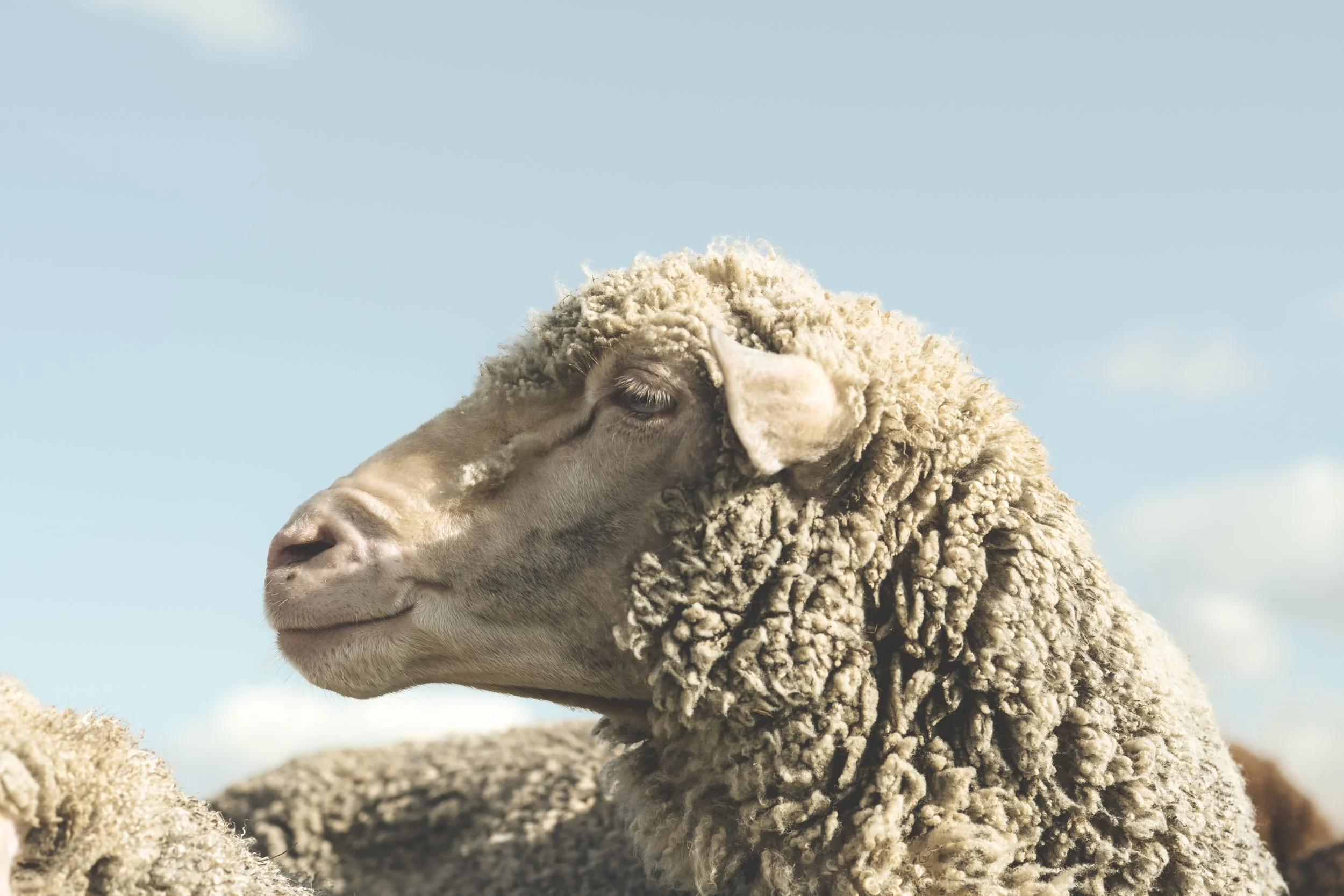
One of our Merino sheep at Dodge Farm.
How Merino came to Vermont
In the early 1800s, war in Spain loosened the country’s closely guarded control over its Merino sheep. William Jarvis, an American merchant serving as consul to Portugal, saw an opportunity to bring the prized animals to the United States. He later established his flock in Weathersfield, Vermont.
Their fine wool found an eager market among New England’s textile manufacturers. Sheep could graze rocky land that was difficult to cultivate, and Vermont farmers invested heavily in the promise of wool. By 1837, the state had more than a million sheep.
The boom changed both the landscape and the economy. Farms expanded, land was cleared for pasture, and livelihoods became tied to wool prices. When tariffs changed and cheaper wool arrived from farther west, many Vermont farmers could no longer compete. The great sheep boom receded.
But raising sheep and making goods from their wool remained part of life here.
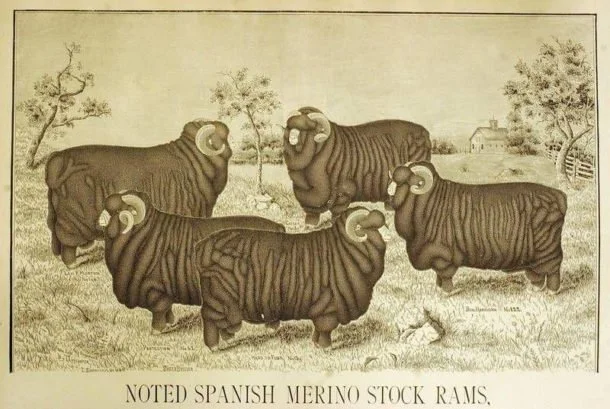
The early days of Merino in Vermont.
Why we raise Merino
The qualities that made Merino valuable then are still useful now.
Its fine fibers give it a softness that makes it comfortable close to the skin. Like other wool, it insulates while allowing moisture to move through the material, helping us stay comfortable as temperatures and activity change. These are welcome qualities in a place where a cool morning can become a warm afternoon, and winter calls for layers worn day after day.
Merino is not the easiest sheep to raise in Vermont’s wet climate. Keeping a flock here takes attention and commitment. At Aurora, we have chosen to make that work part of our daily lives.
Our small flock of 27 sheep keep us connected to the material long before it reaches the mill. There is feeding and fencing, haymaking and storage, shearing, and the ongoing responsibility of caring for animals. Each fleece represents a season of that work.
It also gives us a shared understanding with the farmers who bring us their fiber. We know that a bag of wool arriving at the mill holds time, expense, and care.
Wool needs a place to go
Today, Vermont’s sheep farms raise many breeds, each with its own qualities. Merino is one part of that wider community. Different fleeces offer different possibilities for yarn, clothing, blankets, and other useful goods.
Getting that wool into use can be difficult.
The Vermont Sustainable Jobs Fund’s 2026 wool report identifies processing access and cost as major obstacles. Farmers may wait a year or longer for a mill slot, or store fleeces while gathering enough wool to meet processing minimums. For a small flock, the distance between shearing and having something ready to sell can be considerable.
A working mill helps close that distance.
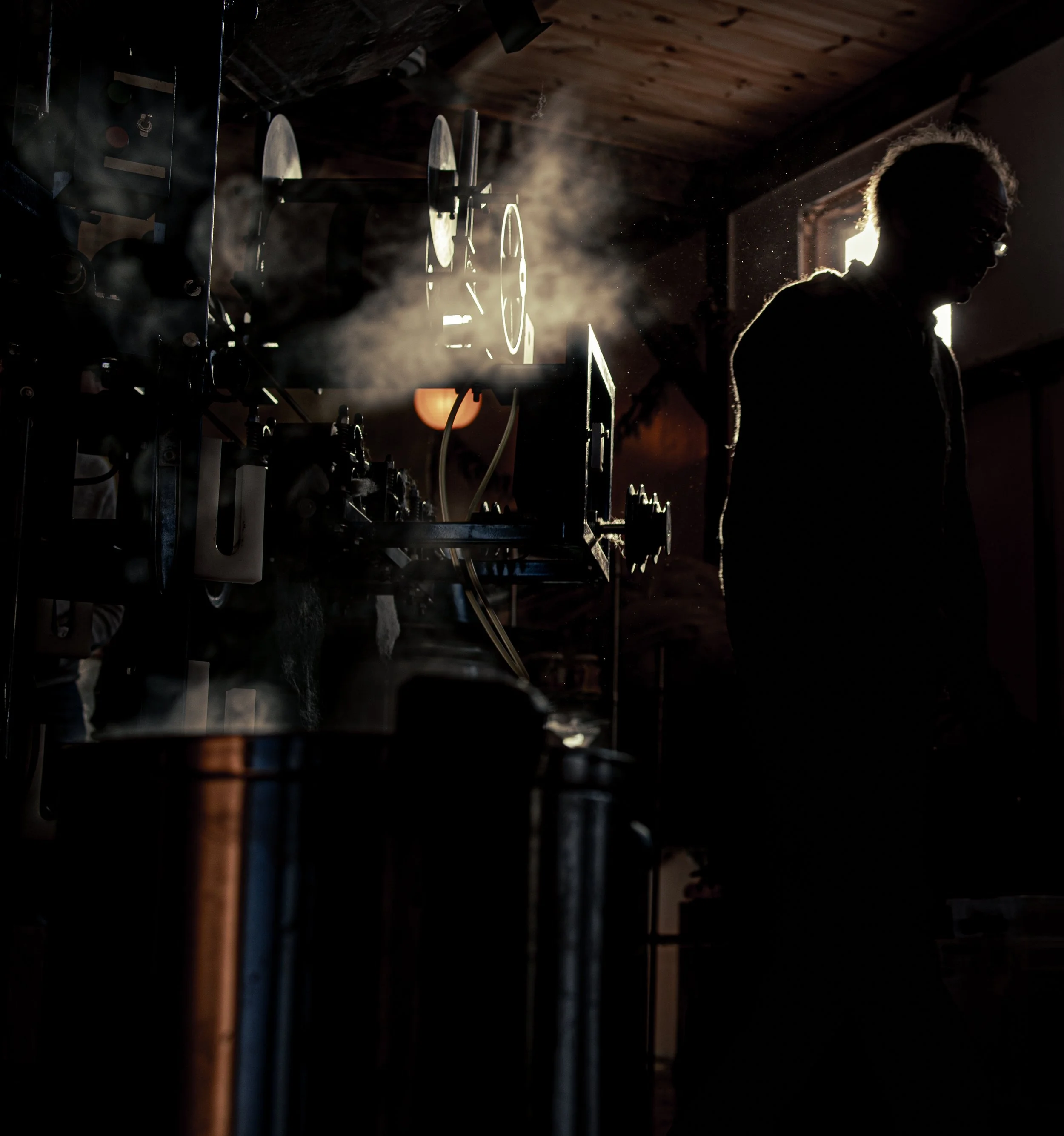
Aurora Fiber Mill in operation
Our part in the work
Aurora is both a farm and a small processing mill. Alongside raising our own sheep and making Aurora Made woolens, we process fiber for small and medium-sized farms across the Northeast.
For another shepherd, that might mean having fleece returned as roving or yarn, ready to use or sell under their own farm’s name. For us, wool from our flock and other regional farms becomes material for the pieces we make here.
Both kinds of work help give local fiber a useful future. Our own woolens show what that fiber can become; custom processing helps other farmers realize its possibilities for themselves.
Vermont’s wool history continues through these everyday decisions: to keep a flock, maintain a mill, or make something worth wearing for years.
We are glad to have a part in it. And when either processed fiber or an Aurora Made piece leave our farm, we want the care of the sheep, the work of the mill, and the place where it was made to remain part of its story.
—
SOURCES
Vermont Wool Production - Challenges and Pathways Forward - Vermont Sustainable Jobs Fund, January 2026
William Jarvis & the Merino Sheep Craze, Vermont History